
Blog
Feel free to explore and read
How exercise can be helpful in the management of anxiety?
08/10/2026 #post21
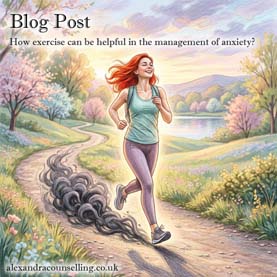 There is a lot of research about the positive impact of exercise and physical activity on stress and anxiety. It is profoundly different from practicing mindfulness, and while both have their own unique benefits, doing something physical engages your body directly to shift your nervous system and release built-up tension.
The benefits of exercise on mental health
Exercise itself, of course, helps our body in a number of ways, and while it helps maintain general health and fitness, it can also reduce stress. How physical activity impacts your mental health is something you only truly learn when you try it and do it consistently. According to research, many people find exercise helpful for improving their mood and reducing symptoms of depression, stress, and anxiety. Other people report smaller, but still positive, impacts. A major effect is that during exercise, our bodies produce endorphins—our "happy hormones." That's the main reason why, after doing physical activity, we often feel quite upbeat(1).
How exercise helps with anxiety
Exercise and physical movement act as the body’s natural mood boosters through endorphin production, which also acts as a natural painkiller. It helps you refocus when you’re stressed or anxious: concentrating on a run or a fitness class keeps you from getting caught up in anxious or negative thoughts, helping you stay more present. Moving your body also helps release the stress hormones that build up while you are anxious or stressed. On top of that, regular exercise improves your sleep, lowers fatigue, and sharpens your concentration—all of which lead to reduced anxiety(2).
Recommended movement
According to research and NHS guidelines, there are certain recommendations for how much we "should" move. While there is helpful information about the different types of movement they recommend, most guidance comes down to the same core principle: aiming for at least 150 minutes of moderate-intensity activity a week, or 75 minutes of vigorous-intensity activity a week(3).
However, it is essential to consider your current fitness level, whether you live with a health condition or disability, whether you take any medication, and so on. These factors can limit the frequency or types of exercise you can safely do; if you aren't sure, consulting your GP is a great first step. Other important considerations, of course, include what is practical, available, and accessible for you.
Building exercise to your routine
If you don’t currently do much exercise, the best approach is to start small.
• Choose a type of exercise: Think about what kind of exercise is realistic for you. Consider factors like finances, local availability, accessibility, and—most importantly—what you would actually enjoy doing.
• Set a realistic goal: Your goal needs to be manageable and achievable. If you don't currently exercise, setting expectations too high can be counterproductive. Starting with a 10–15 minute walk or jog twice a week is a much better start than aiming to run 30 minutes five times a week. You can always build up your activity over time.
• Think about what you need: Consider any necessary gear, such as comfortable clothes or supportive shoes, as well as tools to keep you motivated. For example, many people find it helpful to listen to music or a podcast while moving.
• Find an exercise buddy: If appropriate and possible, invite a friend to join you—whether that’s going to the gym, walking, or attending a class. Knowing someone else is counting on you makes it much easier to stick to your plan.
Disclaimer: This blog post is for educational and informational purposes only and does not substitute for formal mental health advice, diagnosis, or therapy.
Reference
(1) Anxiety and Depression Association of America. Exercise for stress and anxiety [Internet]. Silver Spring (MD): ADAA; [cited 2026 Sep 24]. Available from: https://adaa.org/living-with-anxiety/managing-anxiety/exercise-stress-and-anxiety
(2) Anderson E, Shivakumar G. Effects of exercise and physical activity on anxiety. Front Psychiatry. 2013 Apr 23;4:27. https://pmc.ncbi.nlm.nih.gov/articles/PMC3632802/
(3) National Health Service (NHS). Physical activity guidelines for adults aged 19 to 64 [Internet]. London: NHS; 2024 May 22 [cited 2026 Oct 1]. Available from: https://www.nhs.uk/live-well/exercise/physical-activity-guidelines-for-adults-aged-19-to-64/