
Blog
Feel free to explore and read
How can therapy help with managing anxiety?
25/09/2026 #post20
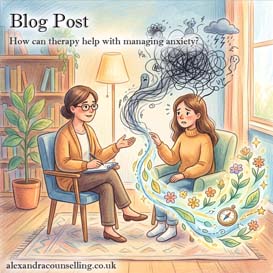 Anxiety refers to a state of heightened apprehension or fear, typically marked by physical stress responses such as rapid heart rate, breathing difficulty, muscle tightness, restlessness, hot or cold flashes, and lightheadedness. Feeling anxious is a completely normal human reaction, but when those feelings don't fade, feel out of control, or start getting in the way of your everyday routine, it becomes a broader issue.
Talking therapies
There are several types of talking therapy available depending on what we need and what we are looking for. This article mainly focuses on two.
In counselling, which is one form of talking therapy, you explore your thoughts, feelings, and life experiences with a professional who listens without judgment and helps you discover your own ways forward. The other type is probably one of the most popular talking therapies these days which is cognitive behavioural therapy (CBT). It is often used first when you reach out to your GP for NHS Talking Therapies, or if you have an Employee Assistance Programme at your workplace. CBT helps you explore how your thoughts and actions shape how you feel, offering practical tools you can practice in everyday life between meetings. Because everyone’s experience is unique, different styles of CBT can be adapted to fit what works best for you(1).
Counselling for anxiety
An integrative counsellor offers a compassionate and safe space to make sense of your anxiety, explore it, map out what triggers it, and discover practical ways to regain control. By gently challenging the inner negative narratives that keep anxiety alive, therapy helps shift your mindset and lighten the burden you're carrying. As we are all unique with our feelings and experiences, there is no one-size-fits-all approach. That’s why a tool or approach might work for one person but not another, even if both are struggling with anxiety(2,3). However, understanding and discovering your anxiety and its triggers can be an important step toward moving forward. Work with a counsellor can also include trying and learning new coping strategies, recognizing unhelpful behavioural patterns, and understanding where these feelings might be coming from.
Cognitive Behavioural Therapy for anxiety
CBT explores the connections between your thoughts, feelings, and behaviours to help you interrupt the cycles that fuel anxiety. While centered on your current struggles, specific CBT methods can also process past trauma or core experiences shaping your present reactions. CBT is the NICE (National Institute for Health and Care Excellence) first-line recommendation for anxiety disorders and is a widely recognized, evidence-based approach. Many people like its direct and structured nature, alongside its short-term structure—which normally runs between 6 and 15 sessions. However, this doesn’t work for everybody. For people who prefer less structure, dislike tasks between sessions (such as thought records), or want to dig deeper into the past to explore the roots of issues or trauma, it may not be the ideal way forward(4).
How to find the right therapist for yourself?
It is worth looking through different directories where you can find registered and qualified counsellors or psychotherapists. Because these job titles are not legally protected in the UK, ensuring a practitioner is properly qualified and registered with a professional body is vital. A counsellor or therapist will normally have their own professional indemnity insurance. On their profile or website, you can read about how they work, their expertise, and their background, or even look at their photograph to see if you feel comfortable reaching out. Many therapists offer an initial consultation or introductory call, which is a great opportunity to speak with them and gauge whether you feel like a good fit. Of course, you will gain a clearer sense of this once you begin working together, as therapy is always a process that takes time.
Below, you can find links to three main directories to help you find a private therapist. Alternatively, you can speak to your GP for a referral to NHS Talking Therapies, or you can self-refer directly. There are also several charities that offer low-cost counselling across many regions, so it is always worth exploring local options.
https://www.counselling-directory.org.uk/
https://www.psychologytoday.com/gb/
https://www.bacp.co.uk/search/Therapists
Disclaimer: This blog post is for educational and informational purposes only and does not substitute for formal mental health advice, diagnosis, or therapy.
Reference
(1) National Health Service. Talking therapies [Internet]. London: NHS; 2025 Nov 5 [cited 2026 Sep 7]. Available from: https://www.nhs.uk/tests-and-treatments/talking-therapies/
(2) British Association for Counselling and Psychotherapy. Anxiety: how counselling can help [Internet]. Lutterworth: BACP; [date unknown] [cited 2026 Sep 7]. Available from: https://www.bacp.co.uk/about-therapy/what-therapy-can-help-with/anxiety/
(3) Gifford B. Anxiety [Internet]. Camberley: Counselling Directory; 2026 Jul 2 [cited 2026 Sep 7]. Available from: https://www.counselling-directory.org.uk/topics/anxiety.html
(4) Anxiety UK. Cognitive Behavioural Therapy (CBT) [Internet]. Manchester: Anxiety UK; [date unknown] [cited 2026 Sep 7]. Available from: https://www.anxietyuk.org.uk/get-help/cognitive-behavioural-therapy-cbt/
Coping vs distraction: Which one is which?
12/09/2026 #post19
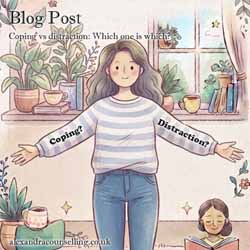 When we deal with daily stressors, difficulties, or major challenges, we turn to our coping strategies to navigate the situation and manage our emotions. We can have healthy and unhealthy strategies, but their underlying purpose remains the same: to reduce emotional intensity and help us manage the here and now.
Healthy Coping Mechanisms
There are numerous coping strategies available because there is no single perfect way to manage difficulties. What works for one person may not work for another. Whether a coping tool is helpful also depends on the situation; managing frustration in a traffic queue requires a different approach than handling work-related stress, low mood, or anxiety.
Healthy and effective coping mechanisms support our physical and mental well-being, strengthen resilience, and help us overcome challenges more easily. On the other hand, unhelpful strategies can negatively affect both our mental and physical well-being, often causing additional stress and anxiety. Examples of healthy coping strategies include breathwork, meditation, reading, listening to music, or talking to someone. When choosing a good coping skill, it is also important to consider what the primary focus of that skill is(1,2).
Coping Mechanism Styles
Understanding your natural coping style helps you choose the right approach for any challenge. Tailoring these strategies to your specific situation builds resilience and improves long-term mental well-being.
Solution-focused style involves taking practical, targeted action to solve the underlying problem, whether facing an overwhelming work situation or a personal issue.
Emotion-focused coping centers on managing your internal reaction to stress when you cannot change the external situation. For instance, if you are navigating an ongoing relationship issue that cannot be resolved quickly, you need to look after your emotional well-being and find ways to relax.
Meaning-focused coping transforms how you view adversity by searching for purpose and growth amid challenges, such as job loss or other major life events.
Social coping involves reaching out to others during difficult times. It is not necessarily about finding solutions—as that is not always possible—but sharing our difficulties can help us gain new perspectives. This might include talking to a friend or family member, calling a helpline, or seeking professional support.
Unhelpful Coping Mechanisms
Unhelpful strategies can feel beneficial in the immediate moment, but over the long term, they often do more harm than good. Examples include substance use, emotional eating, compulsive shopping, or excessive TV watching. While turning to these behaviors may offer temporary relief, they fail to resolve the core issue.
Distraction: Using Coping as a Blanket
Distraction is normally a healthy and helpful short-term tool for managing immediate stress. However, when distraction becomes permanent or long-term, it shifts into avoidance of the underlying issue, ultimately causing further distress, guilt, or shame.
When we distract ourselves through binge eating or binge-watching television, we turn away from our thoughts and feelings in the hope of feeling better. While temporary distraction has its place, relying on it repeatedly can signal a pattern of escaping from uncomfortable emotions. This can quickly create a vicious cycle: short-term solutions offer brief, immediate relief, but lead to increased stress and anxiety when the activity stops, along with heightened avoidance of the actual problem.
Building Healthier Coping Skills
We have the agency to break these vicious cycles, adopt healthier coping mechanisms, and build personal resilience. The starting point is making time for reflection. This can be done in writing—such as journaling—through quiet mental reflection, or by talking things through with someone else.
Naming and identifying emotions helps us understand what we are experiencing and why we feel that way. It is important to balance reflection with enjoyable activities. Reflection is essential, but that does not mean you cannot enjoy relaxing activities like watching television.
To ensure these activities serve as rest rather than escape, try setting clear boundaries and reframing their intent. Viewing an activity as a deliberate choice to recharge changes your relationship with it. Setting boundaries helps keep these habits intentional—for example, choosing to watch two hours of television rather than five, or enjoying two biscuits rather than ten.
If you feel that additional support would be beneficial, consider reaching out to a professional, such as your GP, a counsellor, or a psychotherapist.
Disclaimer: This blog post is for educational and informational purposes only and does not substitute for formal mental health advice, diagnosis, or therapy.
Reference
(1) Jarvis A. Understanding coping skills vs distraction: are you avoiding the real issues? Dr. Ashley Jarvis Blog. 2025 Nov 18 [updated 2026 Jun 25; cited 2026 Sep 3]. Available from: https://www.drashleyjarvis.com/post/understanding-coping-skills-vs-distraction-are-you-avoiding-the-real-issues
(2) Calm Editorial Team. 14 healthy coping strategies and skills to cope with real life. Calm Blog [Internet]. 2024 Feb 9 [cited 2026 Sep 3]. Available from: https://www.calm.com/blog/coping-strategies
How Green Helps with stress, anxiety and burnout
26/08/2026 #post18
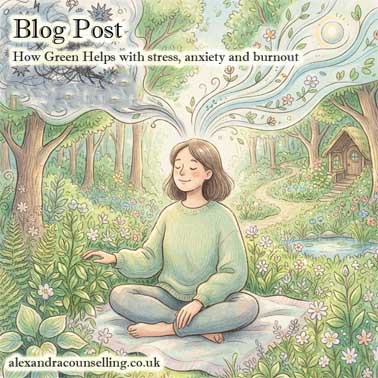 People facing stress, anxiety, and burnout is a worldwide problem, and numbers show that this is increasing; in 2021, anxiety disorders were the most common mental health problems, affecting more than 300 million people(1). Also, a Burnout Report from 2025 shows an increase in time off work due to stress and mental health issues(2). It is therefore important to fight against these issues. How can greenspace help with any of these?
Greenspace - what is it?
The umbrella term “greenspace” encompasses both managed and wild natural areas, ranging from municipal parks to nature reserves and wilderness regions. Especially within urban settings, these areas are frequently allocated specifically for public recreation and visual appeal(3). Living in greener urban environments is linked to better mental health, including reduced anxiety, depression, and psychological distress, as well as improved cortisol levels (the body's stress hormone) and overall well-being. Studies show that people in greener areas have significantly lower disease rates than those in less green settings, regardless of socioeconomic background.
Theories on the impact
There are several studies investigating the impact of greenspace on our mental health, including “blue space” as well, which includes not just visiting parks and forests, but also rivers or lakes. The stress reduction hypothesis suggests that nature triggers physical responses that lower stress. Similarly, attention restoration theory argues that spending time in natural settings recharges mental energy, helping us recover concentration and focus. According to the biophilia hypothesis, our evolutionary past in wild settings created an inborn need to connect with nature for survival(4).
The positive impact of greenspace on mental health
Data from a study conducted in Wales showed that people had a lower risk of depression and anxiety when they had access to nearby green and blue spaces—specifically, if they lived within 200–300 metres of green spaces(5). Another study showed a positive impact on happiness, sense of meaning, and social interactions for those who connected with nature(6). Additionally, several other studies found a positive impact on connectedness, concentration, emotions, and overall mental health(7).
Simple ways to bring green space into your daily life
You don’t need to visit mountains, forests, or big lakes every weekend to benefit from nature. Research shows that even small, regular doses of green and blue spaces can make a significant difference in lowering stress and preventing burnout. Here are a few practical ways to incorporate nature into your everyday routine:
* Bring nature indoors: If you can, keep houseplants. Try to get as much natural light as possible when you’re at home—whether by spending time in the garden, placing your desk or chair facing a window, or using natural light lamps. You can even listen to nature soundscapes, such as rainfall, forest sounds, or waves.
* Reduce screen time: When you are out and about, try not to look at your phone. You’re out in nature—look around, listen, and observe. There is plenty to see. If it feels difficult at first, start with small steps: a micro-dose of nature, like a 5–10 minute walk.
* Plan journeys: Think about places you can visit, whether they’re close to you or a bit farther away, and plan a day out.
Disclaimer: This blog post is for educational and informational purposes only and does not substitute for formal mental health advice, diagnosis, or therapy.
Reference
(1) World Health Organization. Anxiety disorders [Internet]. Geneva: World Health Organization; 2023 Sep 27 [cited 2026 Aug 7]. Available from: https://www.who.int/news-room/fact-sheets/detail/anxiety-disorders
(2) Mental Health UK. Burnout Report 2025 reveals generational divide in levels of stress and work absence [Internet]. London: Mental Health UK; 2025 Jan 16 [cited 2026 Aug 7]. Available from: https://mentalhealth-uk.org/news-and-insights/burnout-report-2025-reveals-generational-divide-in-levels-of-stress-and-work-absence/
(3) Barton J, Rogerson M. The importance of greenspace for mental health. BJPsych Int. 2017 Nov 1;14(4):79-81. doi: https://doi.org/10.1192/s2056474000002051
(4) Weir K. Nurtured by nature. Monitor Psychol [Internet]. 2020 Apr [cited 2026 Aug 21];51(3):50. Available from: https://www.apa.org/monitor/2020/04/nurtured-nature
(5) Geary RS, and others. Ambient greenness, access to local green spaces, and subsequent mental health: a 10-year longitudinal dynamic panel study of 2·3 million adults in Wales. Lancet Planetary Health 2023; 7: E809 – 818.
(6) Bratman GN, Anderson CB, Berman MG, Cochran B, de Vries S, Flanders J, et al. Nature and mental health: An ecosystem service perspective. Sci Adv. 2019 Jul 24;5(7):eaax0903. https://www.science.org/doi/10.1126/sciadv.aax0903
(7) Mayer FS, Frantz CM, Bruehlman-Senecal E, Dolliver K. Why is nature beneficial?: The role of connectedness to nature. Environ Behav. 2009 Sep;41(5):607-643 https://journals.sagepub.com/doi/10.1177/0013916508319745
Beyond The To-Do List - Uncovering the Simple Power of Slow Looking
06/08/2026 #post17
 I personally enjoy the houses and gardens maintained by the National Trust. In their spring magazine, an article discussed "slow looking"—what it means and the benefits of practicing it(1). The article reminded me of our rushed lifestyle: the constant need for—and pursuit of—instant gratification, moving rapidly from one thing to the next. As a therapist, I often hear clients asking "what’s next?"—frequently struggling to stay present and enjoy what they have in the moment.
What does slow looking mean?
Slow looking is the practice of pausing to immerse yourself in a single artwork or object. By slowing down, you give your eyes time to adjust, quiet the noise, and uncover details you would otherwise miss—as curator Amy Orrock explained in the article. The piece highlights that people spend, on average, just eight seconds looking at each artwork in a museum or gallery before rushing to the next. What can you truly notice in that brief moment? How would it feel to sit in that stillness—to genuinely look at the artwork in front of you and focus on its details?
Slowing down in general
Our fast-paced world encourages us to stay engaged and entertained at all times. We use our phones significantly more than we did a decade ago; they offer everything we could possibly need, from banking and messaging to social media, video, and music.
When I looked around during a recent visit to the Eden Project, I noticed that the majority of visitors looked at a plant, snapped a photo or two, and immediately moved on—without truly being there or enjoying the moment. It felt almost like a competition: quickly view everything, tick the box, and finish for the day. I see similar patterns outdoors, where people are meant to be enjoying their surroundings. Even on a day off or during a holiday, people often feel compelled to plan what’s next—for many, doing "nothing" feels completely off-limits.
Disadvantage of rushing and being ‘always on the go’
In modern Western society, having an endless, ongoing to-do list from morning until bedtime is common. It spans work, family commitments, chores, and other responsibilities. Frequently, the moment one item is crossed off, another immediately takes its place.
We often attempt to multitask because it feels efficient. However, research doesn't support this belief; studies reveal that multitasking actually slashes productivity by up to 40 percent while increasing the likelihood of errors(2). Constantly rushing through a persistent to-do list without proper breaks can lead to elevated stress, prolonged or chronic anxiety, overwhelm, mental exhaustion, and burnout(3).
Advantages of slowing down
Slowing down saves energy—especially mental energy. In conversations, it allows you to truly listen to the other person rather than mentally rehearsing what to say next or itching to speak. As a result, you remember more of what was shared and what you experienced.
During activities—whether exploring nature or wandering a gallery—you become freer to enjoy the present moment. You begin to notice finer details, engaging all your senses to take in the bigger picture and register the world around you. In nature, for example, this means taking time to listen to birdsong, feel the wind, and observe wildlife.
Action plan for your next slow down
Practice makes perfect! If you want to cultivate slowness or practice slow looking, you have to start somewhere. We can't expect ourselves to make drastic, overnight changes. Start small:
* Take a different kind of walk: If you normally rush, slow your physical pace. Try to register as many sensory details—sights, sounds, and scents—as possible.
* Make a mindful cup of tea or coffee: Focus entirely on the small steps of making and drinking it.
Disclaimer: This blog post is for educational and informational purposes only and does not substitute for formal mental health advice, diagnosis, or therapy.
Reference
(1) Smith J. Restoring the ancient woodlands. National Trust Magazine. 2026 Spring; 24–27.
(2) Bonhoeffer J. The science of slowing down. Psychology Today [Internet]. 2025 Oct 3 [cited 2026 Aug 6]. Available from: https://www.psychologytoday.com/gb/blog/heart-of-healthcare/202509/the-science-of-slowing-down
(3) Cardinal Hope Counseling. Slowing down: the mental health benefits of doing less [Internet]. New York: Cardinal Hope Mental Health Counseling Services PLLC; [cited 2026 Aug 6]. Available from: https://cardinalhopecounseling.com/slowing-down-the-mental-health-benefits-of-doing-less
Eustress, Stress vs. Burnout: How to Tell Which One You're Experiencing
23/07/2026 #post16
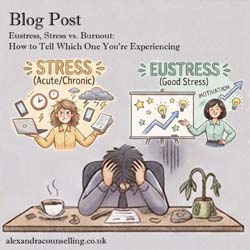 We are all familiar with the terms stress and burnout. Most of us have experienced one or both firsthand, or watched someone close to us navigate them. While both have become common buzzwords in recent years, there are critical differences between everyday stress, chronic stress, and full-blown burnout.
‘Good stress’ or Eustress
Stress is something most people experience on a daily basis. Contrary to popular belief, stress isn't inherently negative—we actually need it to handle life's demands.
Think of stress as your body’s built-in alarm system. It’s a natural biological reaction designed to keep you safe in high-stakes situations, sparking instant physical and mental shifts so you can react quickly when it matters most. ‘Good’ stress—or eustress—motivates us to take action, gives us an extra boost of energy when needed, and helps us achieve our goals. According to psychologist Dr. Kara Fasone, positive stress is all about pushing your limits without completely running yourself into the ground(1, 2).
Examples of eustress appear in both work and personal life. They can include:
* Taking on an exciting new project with realistic deadlines
* Learning a new skill or focusing on personal growth and resilience
* Preparing for a sports competition or public event
* Stepping slightly outside your comfort zone to expand your capabilities
‘Bad stress’ or Distress
Most acute stress is a short-term reaction to immediate pressure. Therefore, they are temporary. Because it’s tied to specific triggers, it typically resolves once you apply effective coping strategies. Although feeling stressed is uncomfortable, a manageable amount can actually sharpen your focus.
However, stress becomes overwhelming when it is prolonged and your usual coping strategies stop working. Stress affects our emotions, behavior, and physical health, showing up in a few key ways(3):
* Emotional signs: Anxiety, irritability, or feeling short-tempered.
* Physical symptoms: Headaches, body aches, and persistent muscle tension.
* Behavioral signs: Avoidance, becoming quick to anger, or increased argumentativeness.
When stress remains persistent over an extended period without relief, it turns into chronic stress—a continuous state of pressure and overwhelm(4).
Burnout
Burnout is what happens when your emotional battery completely drains. It is the end result of long-term, unaddressed stress that leaves you feeling exhausted, detached from your responsibilities, and running on empty.
Unlike everyday stress, rest alone won't instantly fix burnout. Even if you step away from work or responsibilities for a weekend, recovery takes time. Think of stress as your body's check-engine light. If you keep driving without addressing it, burnout is the breakdown.
Burnout signs also manifest across three main areas(3):
* Emotional signs: Cynicism, hopelessness, detachment, or feeling depressed.
* Physical signs: Frequent illness due to a weakened immune system, persistent exhaustion, medically unexplained symptoms, and sleep disruptions.
* Behavioral signs: Withdrawing socially, avoiding hobbies you used to enjoy, or isolating yourself from loved ones.
Management and prevention
Both chronic distress and burnout are manageable and treatable, but burnout in particular cannot be "fixed" overnight.
If you are struggling, support is available:
Workplace Support: Many organizations offer Employee Assistance Programs (EAPs), providing free confidential counselling regardless of whether your issues are strictly work-related.
Professional Care: You can reach out to a private counselor or schedule an appointment with your GP to explore therapeutic support tailored to your needs or any other support you may need.
Ultimately, burnout is often a sign that something fundamental needs to change. What you are currently doing is no longer serving your health or well-being. This might mean negotiating workload changes with your employer, re-evaluating personal boundaries, or restructuring responsibilities at home. But something needs to be changed.
Disclaimer: This blog post is for educational and informational purposes only and does not substitute for formal mental health advice, diagnosis, or therapy.
My previous blog about burnout can be found here:
When Life Becomes Too Much - Recognizing Burnout
References
(1) Lindberg S. Eustress: the positive type of stress, examples, and more. Healthline [Internet]. 2026 Mar 3 [cited 2026 Jul 23]. Available from: https://www.healthline.com/health/eustress
(2) Cohen H. Eustress: the good stress. Psychology Today [Internet]. 2024 Aug 13 [cited 2026 Jul 23]. Available from: https://www.psychologytoday.com/gb/blog/be-the-sun-not-the-salt/202408/eustress-the-good-stress
(3) Teladoc Health UK. The difference between stress vs burnout [Internet]. London: Teladoc Health UK; [cited 2026 Jul 23]. Available from: https://teladochealth.org.uk/blog/signs-of-burnout-vs-stress/
(4) Yale Medicine. Chronic stress [Internet]. New Haven (CT): Yale Medicine; [cited 2026 Jul 23]. Available from: https://www.yalemedicine.org/conditions/stress-disorder
When Life Becomes Too Much - Recognizing Burnout
13/07/2026 #post15
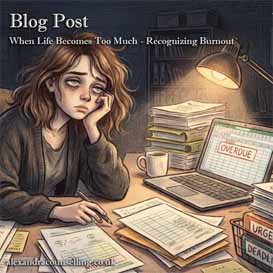 While it’s not an official medical diagnosis, burnout is a recognized syndrome, meaning it's a specific collection of symptoms. At its core, burnout is complete physical, emotional, and mental exhaustion that sneaks up on you after dealing with chronic, long-term stress and pressure(1).
Stress vs. Burnout
It’s easy to confuse stress with burnout, but they really aren't the same. Stress is that short-term, high-wire act where you're exhausted but still pushing through. Burnout is when the tank - or emotional cup - hits absolute empty. It leaves you feeling so detached and drained that just getting through the day feels impossible, alongside that heavy feeling that things won't ever change. If you're there right now, know that it's not just "all in your head." While burnout is most frequently discussed in a professional context—often driven by a poor work-life balance over the long term—it is by no means limited to the workplace. Individuals can experience severe burnout in various demanding life circumstances. Chronic health management, caregiving responsibilities for a loved one, and the intense, continuous pressures of parenthood can all trigger the identical physiological and emotional toll(1).
How Symptoms Manifest
Burnout symptoms manifest in three main categories: cynicism, exhaustion, and ineffectiveness. Exhaustion includes feeling drained on every level. Cynicism refers to feelings of detachment from your work—or circumstances—and often brings a cloud of negative thoughts, triggering a deep pessimism where you begin to view every setback as permanent and personal. Finally, ineffectiveness refers to having a negative filter and expecting things to go wrong, an outlook that directly impacts our self-worth(2).
Early Signs of Burnout
Burnout doesn’t appear out of nowhere; it is a gradual process. Therefore, recognizing early symptoms is vital so you can step in. The most frequent physical symptoms include feeling exhausted most of the time, changes in sleep, headaches or other aches, and digestive problems. Psychological and social symptoms involve irritability, high stress, a lack of motivation, and losing joy in activities you used to like, including socializing, which can lead to isolation.
Management and Prevention
Burnout shows that something isn’t right; it shows you need more care or that some of your needs are not being met. Simply put, you need a change. That can mean setting up boundaries at work or home, which can look like a number of things. For example, it could mean saying no to a task when you simply have no capacity to do it, or asking for help if your plate is full. Try creating a to-do list and prioritizing tasks whether they are for work or home, but make sure to put yourself on that list, too—for instance, taking a proper lunch break or watching TV for an hour. Outside of work, your life likely needs to be rescheduled to include stress management and more time for yourself to do something you actually want to do—whatever it is that makes you feel more relaxed and switched off.
Practicing Proper Self-Care
Self-care is a very popular word these days, but it’s important to do it properly. It doesn’t necessarily—or only—mean having a bubble bath and doing a 20-minute yoga class. Self-care means doing whatever relaxes you and recharges your battery. What works for your friend or partner won’t necessarily work for you, so you need to find your own self-care activities. However, there are basic, physical self-care pillars that we all need to look after, and these include proper sleep, good nutrition, hydration, and regular exercise. If your basics aren't right, you can’t build on top of them.
Recovering from burnout isn't a quick fix, and it won't happen overnight. It starts with small, daily choices to protect your peace, set boundaries, and prioritize your own well-being. If you are feeling empty right now, give yourself some grace. You can't pour from an empty cup, and taking a step back to recharge isn't selfish—it's necessary. Start with the basics today, take a deep breath, and take it one day at a time.
Reference
(1) Mental Health UK. Burnout [Internet]. London: Mental Health UK; [updated 2026; cited 2026 Jul 12]. Available from: https://mentalhealth-uk.org/burnout/
(2) American Psychiatric Association. Preventing Burnout: A Guide to Protecting Your Well-Being [Internet]. Washington (DC): American Psychiatric Association; [updated 2025; cited 2026 Jul 12]. Available from: https://www.psychiatry.org/news-room/apa-blogs/preventing-burnout-protecting-your-well-being
Slowing Down in the Heat: Looking After Your Physical and Mental Wellbeing
26/06/2026 #post14
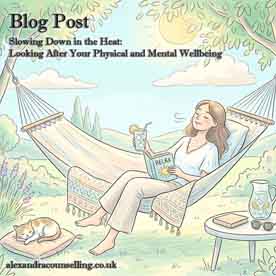 As this week we are experiencing temperatures around 30 degrees, it can really feel like we are boiling.
We are all individuals when it comes to whether we enjoy the summer or not, especially when it’s as hot as it
is right now. I personally love summer and enjoy this heat, but even I sometimes feel it’s a lot—especially when
there’s no aircon and the indoor room temperature hits about 29 degrees! The heat also affects us all differently;
maybe you find it easier to lose your temper, or you are feeling irritable, more anxious, overwhelmed, or just
can’t sleep.
As this week we are experiencing temperatures around 30 degrees, it can really feel like we are boiling.
We are all individuals when it comes to whether we enjoy the summer or not, especially when it’s as hot as it
is right now. I personally love summer and enjoy this heat, but even I sometimes feel it’s a lot—especially when
there’s no aircon and the indoor room temperature hits about 29 degrees! The heat also affects us all differently;
maybe you find it easier to lose your temper, or you are feeling irritable, more anxious, overwhelmed, or just
can’t sleep.
Heat and physical health
The primary and most urgent risks of extreme heat are physical. When you get hot too fast in extreme weather, your body's internal thermostat gets overwhelmed. This breakdown in temperature regulation can trigger a dangerous domino effect of illnesses(1).
Excessive loss of water and salt through sweating causes heat exhaustion, which is characterized by a rapid pulse, dizziness, and clammy skin. If left untreated, this condition can quickly escalate into heatstroke—a total failure of the body's cooling mechanisms that triggers a spike in internal temperature. Also, with the exception of benzodiazepines, virtually all psychotropic medications—and several others, such as blood-pressure pills—interfere with the body's natural heat-regulation system, increasing a person's vulnerability to heat exhaustion and heatstroke.
Heat and its effect on mental health
When the heat just won’t let up, it does more than make us sweaty—it actively wears down our mental health, causing anxiety to spike, irritability, and tension, while leaving us feeling completely brain-fogged. It’s also important to remember that we aren't all in the same boat. Regarding mental health, it can be a lot more challenging for those with existing mental health conditions, especially mood disorders. Plus, if you don't have access to green spaces or aircon, the pressure is even higher. If you’re feeling overwhelmed right now, your feelings are entirely valid.
Moreover, those who currently take an SSRI (selective serotonin reuptake inhibitor), such as Sertraline, can be more vulnerable as well and need to drink more water than they otherwise would. Some of the neurotransmitters involved in mood regulation, such as dopamine and serotonin, are also involved in thermoregulation. This means people may experience rapid mood changes, a worsening of depression and anxiety, or changes in their overall reactions and behaviour(2).
Anger, anxiety, irritability, and insomnia all at once
When temperatures rise, your body works on overdrive just to stay cool. This physical strain triggers the release of cortisol—the body's stress hormone—which rapidly drains your energy and saps the emotional reserves you need for logical, clear thinking. Therefore, you can feel snappy and irritable with situations or people very quickly, which can turn into anger fairly fast. During heatwaves, many people struggle to sleep due to the temperature, which causes further frustration and irritability the next day. Several studies have shown a link between heat, anger, and aggression when examining hotter regions of the world, whether it comes to playing sports or sitting in a traffic queue on a hot day without aircon. Studies also show that people are less patient with each other and less helpful on hot days(3,4).
Anxiety is also heightened during heatwaves, as the physical sensations caused by anxiety—such as a rapid heart rate, trouble focusing, shortness of breath, or even panic—are exacerbated by the symptoms of heat stress. Being outside can worsen the situation due to sensory overload, with crowds of people, noise, smells, and bright sunshine all hitting at once(5).
When a heatwave becomes a problem
A heatwave can quickly become a problem when we don’t drink enough water and become dehydrated, or when we are affected by overheating and heatstroke. Many people can be affected, but some are much more vulnerable than others. Children under 5 and older adults over 65 are at higher risk, as well as those with existing health problems like cardiovascular or lung issues, dementia, diabetes, or kidney disease. It is also important to consider the difficulties faced by those who live alone and need extra support, those experiencing homelessness, pregnant women, and people who work outdoors(6).
How to cope and look out for each other
While we can't change the weather, we can change how we respond to it. During these intense days, give yourself permission to slow down. Drink plenty of water, and be gentle with yourself if your brain feels a little slower or foggy, or your patience is running thin.
Most importantly, let's keep an eye out for one another. If you have an elderly neighbour, a friend or relative who lives alone, or someone in your life who takes medication that makes them sensitive to the sun, check in on them. A quick text or a phone call can make a world of difference.
References
(1) Global Heat Health Information Network. Heat and health [Internet]. Geneva: GHHIN; [cited 2026 Jun 25]. Available from: https://heathealth.info/heat-and-health/
(2) Rony MK, Alamgir HM. High temperatures on mental health: Recognizing the association and the need for proactive strategies—A perspective. Health Sci Rep. 2023 Dec 4;6(12):https://doi.org/10.1002/hsr2.1729
(3) McAndrew FT. Hot and bothered: Does heat make people aggressive? [Internet]. New York: Psychology Today; 2019 May 17 [cited 2026 Jun 25]. Available from: https://www.psychologytoday.com/gb/blog/out-of-the-ooze/201905/hot-and-bothered-does-heat-make-people-aggressive
(4) Cleveland Clinic Newsroom. Why the heat makes us so irritable [Internet]. Cleveland: Cleveland Clinic; 2025 Jul 14 [cited 2026 Jun 25]. Available from: https://newsroom.clevelandclinic.org/2025/07/14/why-the-heat-makes-us-so-irritable
(5) Mental Health Hope. Heat intolerance & anxiety: Causes, signs, and tips [Internet]. [publisher location unknown]: Mental Health Hope; [date unknown] [cited 2026 Jun 25]. Available from: https://mentalhealthhope.com/heat-intolerance-anxiety/
(6)National Health Service. Heatwave: how to cope in hot weather [Internet]. London: NHS; [date unknown] [cited 2026 Jun 25]. Available from: https://www.nhs.uk/live-well/seasonal-health/heatwave-how-to-cope-in-hot-weather/
The Silent Epidemic: Exploring the Many Faces of Loneliness
11/06/2026 #post13
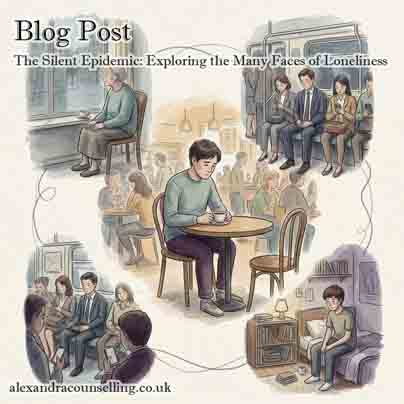 Loneliness Awareness Week takes place from June 15th to June 21st across the world. Loneliness can affect anyone and everyone, regardless of age, gender, or social class. If you look at the numbers, the statistics paint a worrying picture. Loneliness affects half a million older people in England who spend five to six days a week in complete isolation, without any human contact1. According to research commissioned by the Eden Project, 45% of adults in England—equating to twenty-five million people—experience loneliness either occasionally, sometimes, or often2. Furthermore, around 3.9 million older people rely on the television as their primary source of company3.
What is loneliness?
Because loneliness is a subjective feeling, everyone’s experience of it is different. I clearly remember a peer in high school telling me a story, with a nervous laugh, about his sister stating she was lonely. According to him, there was "no reason" for this, as their family was huge and people were always around. What was his sister experiencing? It was very likely existential loneliness—the feeling of being lonely even when surrounded by people you know.
People can also suffer from social loneliness when they lack social connections in general; as a result, they have no one to go out with or share hobbies with. Then there is emotional loneliness, which occurs when someone lacks a deep emotional attachment to a close companion4. Of course, we can all experience situational loneliness every now and then, such as during major life challenges, transitions, birthdays, or Christmas.
What leads to loneliness?
This is a complex question, as there are many different causes. Some loneliness arises from social anxiety, which can make it difficult to meet new people, chat, or form friendships. This can create a vicious cycle: over time, a fear of rejection and abandonment stops a person from initiating conversations altogether.
Loneliness can also appear when we grieve, which can happen after a relationship breakdown just as much as a death. People frequently experience isolation when struggling with depression or other mental health difficulties. Physical health problems and disabilities play a massive role as well, often acting as physical barriers to going out and socializing. Finally, significant life transitions—like moving to a new city, starting a new job or school, becoming a full-time carer, or staying home with a new baby—can trigger intense loneliness. This list is far from exhaustive; there are countless situations that can lead to these feelings5.
Loneliness and its signs
From day one, human beings have an inherent need for connection. Whether we are introverted or extroverted, we all need company, people to talk to, and loved ones to share experiences with. When we can't or don't connect for whatever reason, it can result in a distressing, uncomfortable, and painful sense of isolation. People can feel left out or even isolated due to different circumstances, or even from not having anyone to turn to. It is also an important thing to note here that loneliness often feels out of control—something that we don’t want but is happening to us—and this can make us feel helpless or powerless6.
Health risks of loneliness
Feeling lonely for a prolonged period can lead to serious challenges that impact both physical and mental health. Loneliness is heavily associated with depression, anxiety, stress, and even suicide. It is also linked to unhelpful coping mechanisms, such as drug or alcohol misuse. Elevated stress levels caused by isolation can lead to secondary issues like chronic inflammation and sleep difficulties. Furthermore, those who experience long-term loneliness often adopt a more sedentary lifestyle, leading to further physical health consequences.
Loneliness in a digital age
It is a strange paradox of modern Western society that we have never been more digitally connected, yet loneliness levels are sky-high—a reality further accelerated by the COVID-19 pandemic. Millions of us use social media platforms like Facebook and Instagram, assuming they will help us connect and feel less isolated. In many cases, technology is helpful; you can reach out to anyone at any time, see a loved one's face on a video call, or hear their voice.
However, many platforms are designed for engagement rather than genuine human connection. They promote superficial validation through "likes" and comments, alongside a culture of constant comparison. This can ultimately worsen low self-esteem, anxiety, and isolation.
Moreover, the growing number of people turning to AI for companionship is concerning. The issue isn't using AI when it is safe and appropriate; it is when AI becomes the only entity a lonely person talks to. While an AI chatbot can make us feel listened to without judgment, it completely lacks genuine interest, shared human lived experiences, and authentic connection7.
Managing social connections
Overcoming loneliness is rarely straightforward, and the right approach depends entirely on your individual circumstances. However, if you are struggling, reaching out for help is a vital step—whether that means speaking to your GP, confiding in friends and family, or seeking support from a professional counsellor or psychotherapist.
Depending on your situation, you might try connecting with local community groups, such as a walking club or local volunteering initiatives. If you already have people in your network, simply keeping in touch with them can be a great first step. While in-person meetups are ideal, staying in touch via text, phone call, or video chat is just as valuable if getting out is difficult. Re-engaging with old hobbies or picking up something you've always wanted to try can also bridge the gap.
Below, you will find some helpline numbers if you need someone to reach out to.
Helpline numbers
MIND - Call their support line on 0300 102 1234 to talk about your mental health.
The Mix – offers free and confidential support for young people under 25s: call 0808 808 4494 or text "THEMIX" to 85258
Campaign Against Living Miserably (CALM) – a suicide prevention helpline, providing free and confidential help on 0800 58 58 58. Open daily from 5 pm to midnight.
Silverline – free and confidential helpline (24/7) for people over 55s, call 0800 4 70 80 90
References
(1) Age, U.K., 2014. Evidence Review: Loneliness in Later Life. London: Age UK
(2) Centre for Economics and Business Research. The cost of disconnected communities [Internet]. London: Eden Project Communities; 2016 Dec [cited 2026 Jun 6]. Available from: https://www.edenprojectcommunities.com/the-cost-of-disconnected-communities
(3) Marmalade Trust. Loneliness in numbers: the facts and statistics [Internet]. Bristol: Marmalade Trust; [date unknown] [cited 2026 Jun 6]. Available from: https://www.lonelinessawarenessweek.org/statistics
(4) National Health Service. Loneliness [Internet]. London: NHS; [updated 2023 Dec 15; cited 2026 Jun 6]. Available from: https://www.nhs.uk/every-mind-matters/lifes-challenges/loneliness/#what-is-loneliness
(5) Cherry K. Loneliness: causes, symptoms, and coping strategies [Internet]. New York: Verywell Mind; 2023 May 10 [cited 2026 Jun 6]. Available from: https://www.verywellmind.com/loneliness-causes-effects-and-treatments-2795749
(6) Psychology Today. Loneliness [Internet]. New York: Sussex Publishers; 2024 [cited 2026 Jun 6]. Available from: https://www.psychologytoday.com/gb/basics/loneliness
(7) Psychology Today. Loneliness in the digital age [Internet]. New York: Sussex Publishers; 2025 Aug 27 [cited 2026 Jun 6]. Available from: https://www.psychologytoday.com/gb/blog/psychology-in-society/202508/loneliness-in-the-digital-age
Walk for your Mental Health
28/05/2026 #post12
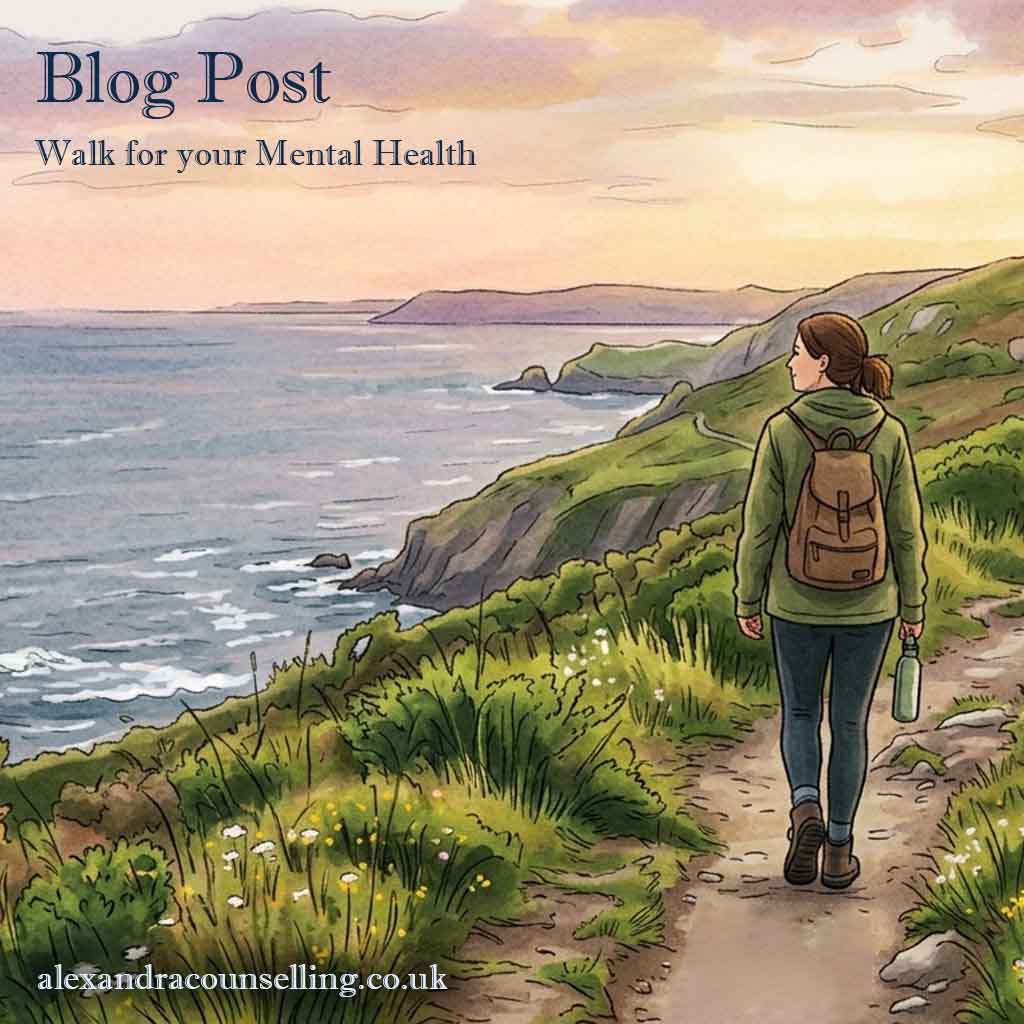 National Walking Month takes place throughout May every year. If you would like to join an organised walk, you can easily find various walking activities and challenges hosted by different agencies or charities during the month. However, there is no pressure to join a group; you can just as easily put on your shoes – or hiking boots – and head out for a walk on your own.
Walking is arguably one of the easiest and cheapest ways to get moving. If you are physically able to walk, it is the simplest activity to incorporate into your life, even if you currently do not exercise and wish to start with just a ten-minute stroll. It is highly accessible, and you do not need a membership or any special equipment.
Supporting physical health
The impact of walking on physical health has been thoroughly studied for a long time, providing robust evidence of its benefits. These include reducing the risk of heart disease, high blood pressure, high cholesterol, diabetes, and cancer. It also supports joint and bone health, boosts the immune system, and can be a valuable tool for weight management1,2,3.As per the NHS recommendations, a brisk 10-minute walk already delivers measurable benefits for the body and counts toward your weekly exercise targets4.
Why walking is good for your mental health
Walking offers numerous mental health benefits. It helps us better manage anxiety and stress, reduces symptoms of depression, and is incredibly useful for navigating burnout. Walking gives us a dedicated space for ourselves to cope and unwind out in nature.
In our modern Western society, we often have fully packed days and weeks filled with constant noise, to-do lists, and heavy expectations. Walking is a wonderful way to step away from this noise and enjoy some quiet time in nature, simply putting one foot in front of the other. In that sense, it is an excellent way to clear brain fog, combat fatigue, and allow our minds to rest. A wealth of evidence shows that being out in nature has a profoundly positive impact on our minds, helping us calm down, enhancing our mood, and even encouraging better sleep5.
Build it into your daily life
If you do not currently exercise, it is important to build walking into your life gradually. If it feels right, you can start with a ten-minute walk per day and build up from there, increasing your minutes as and when you feel ready.
It can be helpful to look at your daily or weekly routine to see where you might naturally implement a walk. For example, you could walk to the local shop, pick up the kids on foot, commute to work, or take a short stroll before dinner or right after your working day ends. Our daily schedules differ, but it is very likely you can find a small window to give this activity a go. You might also find that you have more free time on weekends or on your days off.
Always ensure you are fit for your walking plans and have the right gear. This does not necessarily mean anything fancy—just comfortable shoes and appropriate clothing for the weather, a drink, and perhaps a small snack. Walking can also be much more enjoyable if you have company, whether that is a dog, a friend, or a local walking group. Alternatively, you can listen to music or a podcast while you wander.
How walking helps with stress, anxiety and burnout
While there is plenty of evidence supporting the positive impact of walking, you ultimately need to experience it for yourself to see how it feels. Speaking from personal experience, I have been there and done that. My own walking routes were longer—at least 30 minutes—and I deliberately visited various natural spots, combining the healing elements of nature with physical activity.
The two elements together were incredibly helpful in reducing my stress and anxiety levels, as well as soothing symptoms of burnout. When you are out and about, you naturally focus on your steps, your breathing, and the environment around you. This helps you stay present and feel balanced within your surroundings. Ultimately, this supports "connectedness"—which refers to how we bond with the natural world and the way we feel when we are immersed in it6.
Make it fun or challenge yourself
Keep a goal in mind, but make sure it is realistic and achievable. Start small if you do not walk regularly. Your goal could be a simple 10-minute walk, tracking a familiar route, or exploring a brand-new walking path. If you have the time and capacity, you can visit unfamiliar places like a local field, a nearby forest, or a new park.
If for any reason you cannot manage what you originally planned, please remember that this is not a failure or a problem. You can always start again another day or the following week; you are doing this entirely for yourself.
For more useful information on how to get started, tips for walking, general guidance, and details about the NHS "Active 10" app, visit the NHS Walking for Health guide.
References
(1) Mayo Clinic Staff. Walking: Trim your waistline, improve your health. Mayo Clinic [Internet]. 2024 Jun 13 [cited 2026 May 20]. Available from: https://www.mayoclinic.org/healthy-lifestyle/fitness/in-depth/walking/art-20046261
(2) British Mountaineering Council. Health benefits of climbing and hill walking. The BMC [Internet]. [date unknown] [cited 2026 May 20]. Available from: https://thebmc.co.uk/en/health-benefits-of-climbing-and-hill-walking
(3) Ungvari Z, Fazekas-Pongor V, Csiszar A, Kunutsor SK. The multifaceted benefits of walking for healthy aging: from Blue Zones to molecular mechanisms. GeroScience [Internet]. 2023 Dec [cited 2026 May 20];45(6):3211-3239. Available from: https://pmc.ncbi.nlm.nih.gov/articles/PMC10643563/ doi: 10.1007/s11357-023-00873-8
(4) NHS. Walking for health. NHS [Internet]. 2022 Oct 11 [cited 2026 May 20]. Available from: https://www.nhs.uk/live-well/exercise/walking-for-health/
(5) White H. Happy to be outside: mental health and nature. NHS Forest [Internet]. 2024 Mar 20 [cited 2026 May 20]. Available from: https://nhsforest.org/blog/happy-to-be-outside-mental-health-and-nature/
(6) Mental Health Foundation. Nature: How connecting with nature benefits our mental health. London: Mental Health Foundation [Internet]. 2021 May [cited 2026 May 20]. Available from: https://www.mentalhealth.org.uk/our-work/research/nature-how-connecting-nature-benefits-our-mental-health
From Awareness to Action: Small Steps to Real Change
15/05/2026 #post11
This week in the UK, we celebrate Mental Health Awareness Week between 11th May and 17th May 2026. This year’s theme is "Action." As the Mental Health Foundation stated, awareness is essential, but to achieve real change, we need to take action too1.
Awareness: The first spark of the change
According to the Stages of Change model2, we can often find ourselves in the contemplation stage—where we are aware of a problem and want to make a change, but haven't started yet. Awareness is key; if we aren't aware of a problem, we cannot do anything about it. In the next stage, preparation, we develop the intent to change. This leads directly to action, where we actively modify our behaviour. What you want to change is totally up to you. Maybe you want to exercise more, eat more healthily, drink more water, spend more time with loved ones, start a meditation practice, or create solid boundaries between work and life.
Beat procrastination with behaviour activation
Making changes, even small ones, requires steps that can sometimes cause frustration or stress. It can feel overwhelming, which then leads to procrastination, avoidance, and further frustration. Behavioural activation is a helpful tool to start taking small steps forward. For instance, if you want to be more physically active but don't do any exercise currently, planning an hour-long program five times a week probably won't work. It is too much. Instead, start small: pick a start date and commit to your chosen activity—whether that's running, the gym, swimming, walking, or anything else you enjoy—just once a week. This gives you a boost and the rewarding experience of having made a start! You can then build on that progress the following week.
The magic of micro-actions
We don’t need to achieve everything in one day. Change is most long-lasting when it is slow and gradual. You can start small with anything you want to change. For example, if you want to learn relaxation techniques, try a 5-10 minute meditation video (such as a body scan) or 5 minutes of breathwork (like box breathing) once a day or a few times a week. If you want to read more, start with ten minutes a day. Starting a change is much better than simply fantasising about it and later feeling disappointed that nothing has been done.
When it comes mental health
Sometimes we recognise that the changes we need are more challenging, and we may need help. I am thinking specifically about managing anxiety, stress, burnout, or depression. Maybe you’re aware that anxiety has "taken control" recently, or you feel on edge and discontented. Perhaps you are at a stage in life where a lot is going on, you aren't sure where to start, or you have experienced several transitions at once. When it feels difficult to begin, reaching out to a counsellor or psychotherapist can be a helpful way to find your path forward.
Even with deep-seated issues, little steps still matter. For example, in managing social anxiety, micro-actions might include walking for 10 minutes in a familiar place, then gradually visiting somewhere new. You could try visiting a small shop or a cafe on your own, or perhaps going with a friend first. The "plan" always depends on the individual issue and what you personally want to change.
Before you choose your action, ask yourself: 'How will this change make my life feel better?' Connecting your small step to a personal value makes it much easier to stick to. Also, while you are trying to make changes, gently remind yourself that your ‘actions’ don’t need to go perfectly. Change isn’t a straight line. The goal is progress, not perfection.
So, moving forward: what is one 'micro-action' you can take for your mental health and wellbeing today?
Disclaimer: This blog is for informational purposes and does not replace professional therapeutic advice. If you are in a crisis, please contact your GP, call 111, or reach out to the Samaritans at 116 123.
References
(1) Mental Health Foundation. Mental Health Awareness Week [Internet]. London: Mental Health Foundation; 2026 [cited 2026 May 11]. Available from: https://www.mentalhealth.org.uk/our-work/public-engagement/mental-health-awareness-week
(2) Hussey, J. Cycle of Change [Internet]. Intervention Hub; [n.d.] [cited 2026 May 11] Available from: https://www.intervention-hub.com/lessons/cycle-of-change/